
In medical care, few medicines play as central a role as heparin, a century-old anticoagulant used to help prevent dangerous blood clots, maintain IV line patency, and support many critical medical procedures.
But twice in the last two decades, U.S. heparin supply was threatened by serious recalls, production suspensions and near-critical shortages. Both times, Fresenius Kabi played a central role in protecting patient care.
The First Heparin Crisis: Contamination that Shook the Market
2008 opened with one of the most alarming drug safety crises in U.S. healthcare. Reports of severe allergic reactions and deaths were linked to adulterated heparin sourced from China. Federal investigators later identified the culprit: a counterfeit additive that mimicked the real drug’s chemistry.[1]
This crisis forced the nation’s major supplier to recall nearly all its heparin products.[2] With hospitals desperate for supply, Fresenius Kabi (APP Pharmaceuticals at the time) became the sole large-scale generic injectable drug manufacturer able to meet demand. “Post disruption, it was put to us like, ‘You saved the day!’” recalls Karen Twardzik, Vice President, Customer Service Operations. “We essentially supplied the entire U.S. market for a period of time.”
That experience transformed how the company manages shortage pressures. “It was the first time we really had to think differently about inventory, safety stock, and how we take orders,” says Twardzik. She recalls that the team managed the crisis through careful allocation – shipping smaller amounts more frequently so hospitals could continue treating patients.
Lessons We Learned
- Build redundancy across suppliers and facilities.
- Communicate directly and transparently with hospitals and the FDA.
- Always plan for the unexpected.

A “scarcity mindset” and the absence of clear market signals made it difficult to distinguish true demand from panic ordering. This reality reshaped how Fresenius Kabi communicates with customers – prompting greater transparency, real-time updates, and collaboration with hospitals to align supply with genuine clinical need. It also marked the beginning of a more open, ongoing partnership with the U.S. Food and Drug Administration (FDA) which continues to this day.
Another Threat Averted, a Decade Later
In 2018, African Swine Fever swept through China, killing millions of pigs – the same animals from which heparin’s active ingredient is derived.[3]
As fears of a global shortage spread, Fresenius Kabi acted early. “We used structured scenario planning to stress-test potential strategies,” says Commercial Operations leader Dennis Preusker, who led the response. “We brought in 25 people from various departments (procurement, manufacturing, supply chain, and customer service) to work through different scenarios and response plans. We identified process improvements that accelerated decision making, allowing us to optimize inventory and manage allocations to prevent panic buying.”
Because of those measures, the U.S. did not experience a full-blown shortage. “Years later, customers still remember that,” Preusker says. “We were proactive. We communicated early. And in the end, we helped avert a crisis.”
Resilience, Redundancy – and Readiness
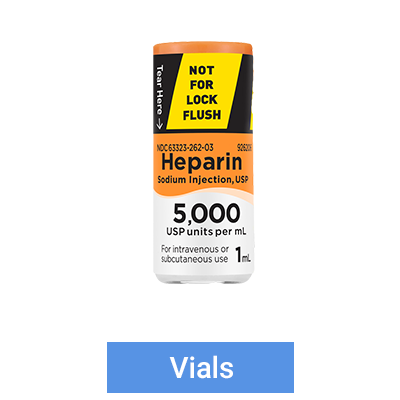
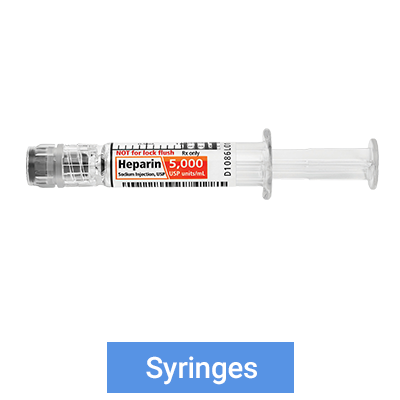
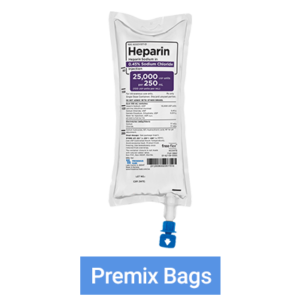
Fresenius Kabi’s current resilience reflects key lessons learned from the past. Today, Fresenius Kabi formulates, fills and packages heparin products across multiple facilities, including two manufacturing facilities in the U.S. and one in Europe, producing vials, prefilled syringes, and premix bags. The company maintains multiple qualified API suppliers and typically carries up to six months of safety inventory for key customers.

“True resilience comes from the experience, preparedness, and judgment of the people who know how to activate those resources when it matters most.”
“Redundancy doesn’t automatically guarantee resilience,” notes Angie Lindsey, Vice President, Marketing. “True resilience comes from the experience, preparedness, and judgment of the people who know how to activate those resources when it matters most.”
A Commitment Rooted in “More in America”
The backstory of heparin also underscores Fresenius Kabi’s More in America initiative – a long-term investment in U.S. manufacturing to strengthen healthcare security and reliability.[4]
“In the case of heparin, Fresenius Kabi produces 100% of the heparin vial and prefilled syringe supply for the U.S. in the U.S.,” Lindsey says. That domestic footprint helps ensure speed from production to delivery – especially important in an era of global instability and trade uncertainty.
“Customers want reliability,” adds Sarala Bindu, Sr. Manager, Marketing, another leader involved in the heparin program.
Heparin, one of the oldest drugs in modern medicine, remains an important part of clinical practice. Support for maintaining the availability of this medication is ongoing thanks to the quiet vigilance of teams like those at Fresenius Kabi.

U.S.-based production remains a strategic consideration when selecting a supplier for this critical therapy. A domestic manufacturer like Fresenius Kabi with a demonstrated track record provides a level of supply assurance not typically afforded by lower-cost offshore producers. “When continuity of care is at stake, experience and a reliable domestic infrastructure matter,” says Bindu.
Heparin, one of the oldest drugs in modern medicine, remains an important part of clinical practice. Support for maintaining the availability of this medication is ongoing thanks to the quiet vigilance of teams like those at Fresenius Kabi.
To learn more about Fresenius Kabi Heparin products, click below.
[1] Harris G, Bogdanich W. “Drug Tied to China Had Contaminant.” The New York Times, March 6, 2008. https://www.nytimes.com/2008/03/06/health/06heparin.html?ref=todayspaper. Accessed 14 November 2025.
[2] Senak M. Heparin at the center of the storm. Am Health Drug Benefits. 2008 Jul;1(6):23-4. PMID: 25126242; PMCID: PMC4106525. https://pmc.ncbi.nlm.nih.gov/articles/PMC4106525
[3] Joseph Keenan. “Fresenius limits heparin as shortages of blood thinner persist.” FiercePharma, September 2, 2019. https://www.fiercepharma.com/manufacturing/as-shortages-heparin-persist-major-producer-fresenius-limiting-allocations. Accessed 14 November 2025.
[4] Fresenius Kabi USA. More in America campaign site. Accessed Nov. 3, 2025. Available at: moreinamerica.com